


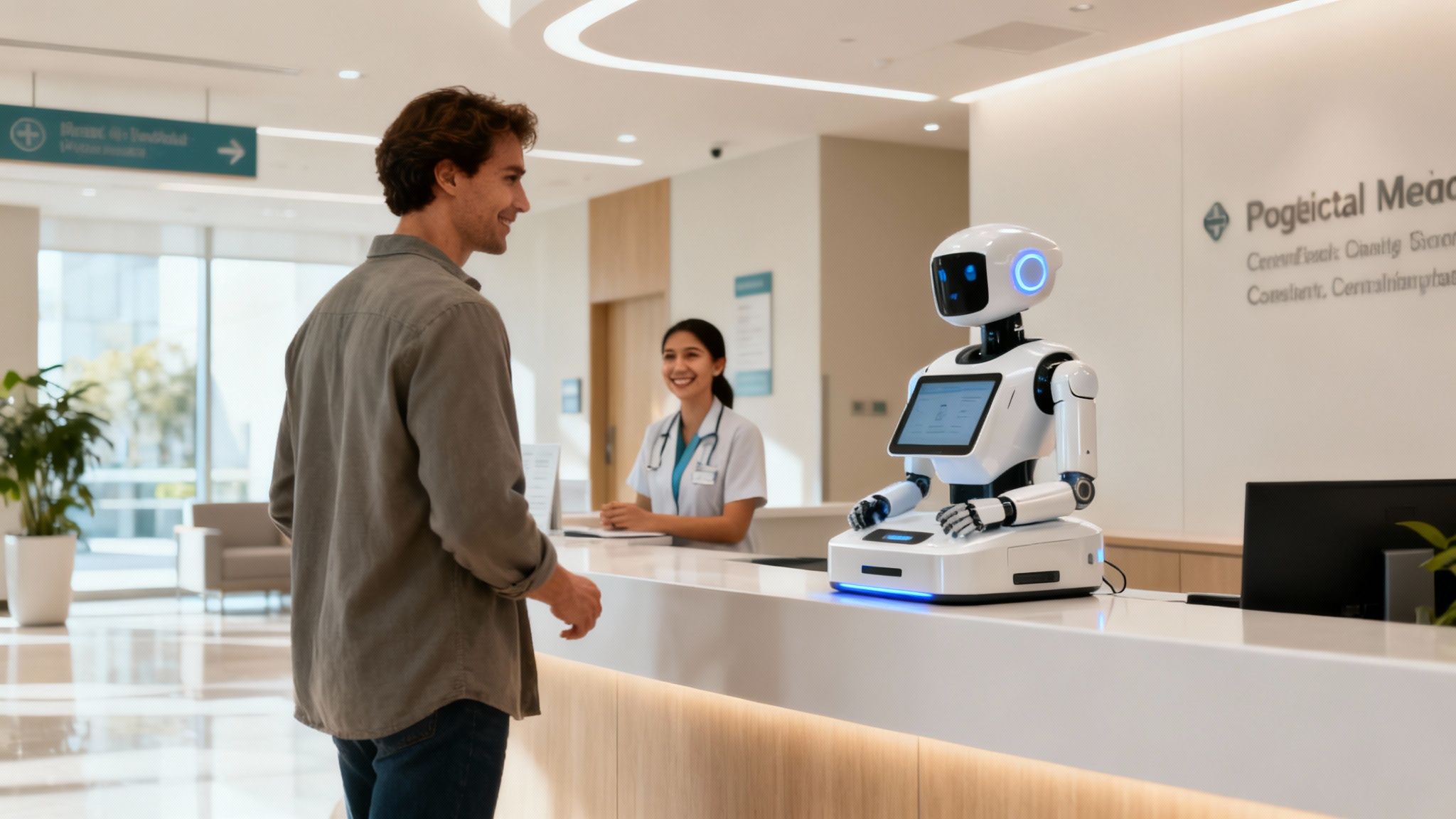
Healthcare providers are increasingly adopting digital solutions to manage growing administrative demands and improve patient communication. Among these innovations, AI receptionist systems are becoming a practical tool for streamlining front-desk operations and ensuring faster, more consistent service delivery.
Rising Demand for Efficient Patient Communication
Medical clinics today handle a constant flow of patient inquiries, including appointment scheduling, prescription questions, and general service information. Traditional reception teams often struggle to manage this volume, especially during busy hours.
This can lead to delayed responses, missed calls, and increased patient frustration. At the same time, administrative staff may become overloaded with repetitive tasks that limit their ability to focus on higher-priority responsibilities.
The Function of AI Receptionists in Clinics
AI receptionists are designed to manage incoming patient communication using conversational technology. They can interact with patients in real time, understand their needs, and provide appropriate responses without human intervention for routine tasks.
Key functions typically include:
- Responding to common questions about clinic services
- Collecting patient details and intake information
- Managing appointment scheduling and modifications
- Redirecting urgent issues to medical staff when needed
This allows healthcare providers to maintain consistent communication without increasing staff workload.
Automating Scheduling and Patient Flow
Appointment scheduling is one of the most time-consuming administrative processes in healthcare. AI receptionists simplify this by allowing patients to book, reschedule, or cancel appointments through automated interactions.
These systems integrate with clinic calendars to ensure real-time accuracy. They can also send automated confirmations and reminders, which helps reduce missed appointments and improves overall patient attendance.
Reducing Pressure on Front Desk Staff
By handling repetitive communication tasks, AI receptionists significantly reduce the burden on administrative teams. This enables staff to focus more on in-person patient care and complex coordination tasks.
The operational benefits often include:
- Fewer incoming routine phone calls
- Faster response to patient inquiries
- Improved scheduling accuracy
- Reduced administrative stress for staff
This creates a more efficient and balanced workflow within healthcare facilities.
24/7 Accessibility for Patients
Unlike traditional reception desks with limited operating hours, AI systems are available around the clock. Patients can access essential services at any time, including nights, weekends, and holidays.
This continuous availability improves convenience and ensures that patients can interact with healthcare providers whenever needed, without waiting for office hours.
Security and Protection of Patient Information
Because healthcare communication involves sensitive personal data, AI receptionist systems are built with strong security protocols. These include encrypted communication channels, secure data storage, and adherence to privacy standards.
Protecting patient confidentiality is a key priority in the design and implementation of these systems.
Conclusion
automated medical receptionist are transforming how healthcare providers manage communication and administrative workflows. By automating routine tasks such as scheduling and answering inquiries, they help reduce workload, improve response times, and enhance patient experience.
Rather than replacing human staff, these systems act as supportive tools that improve efficiency and allow healthcare professionals to focus more on direct patient care.

 English
 Arabic
 Spanish
 Portuguese
 Deutsch
 Turkish
 Dutch
Dutch
 Italiano
 Russian
 Romaian
 Portuguese (Brazil)
 Greek
Greek