


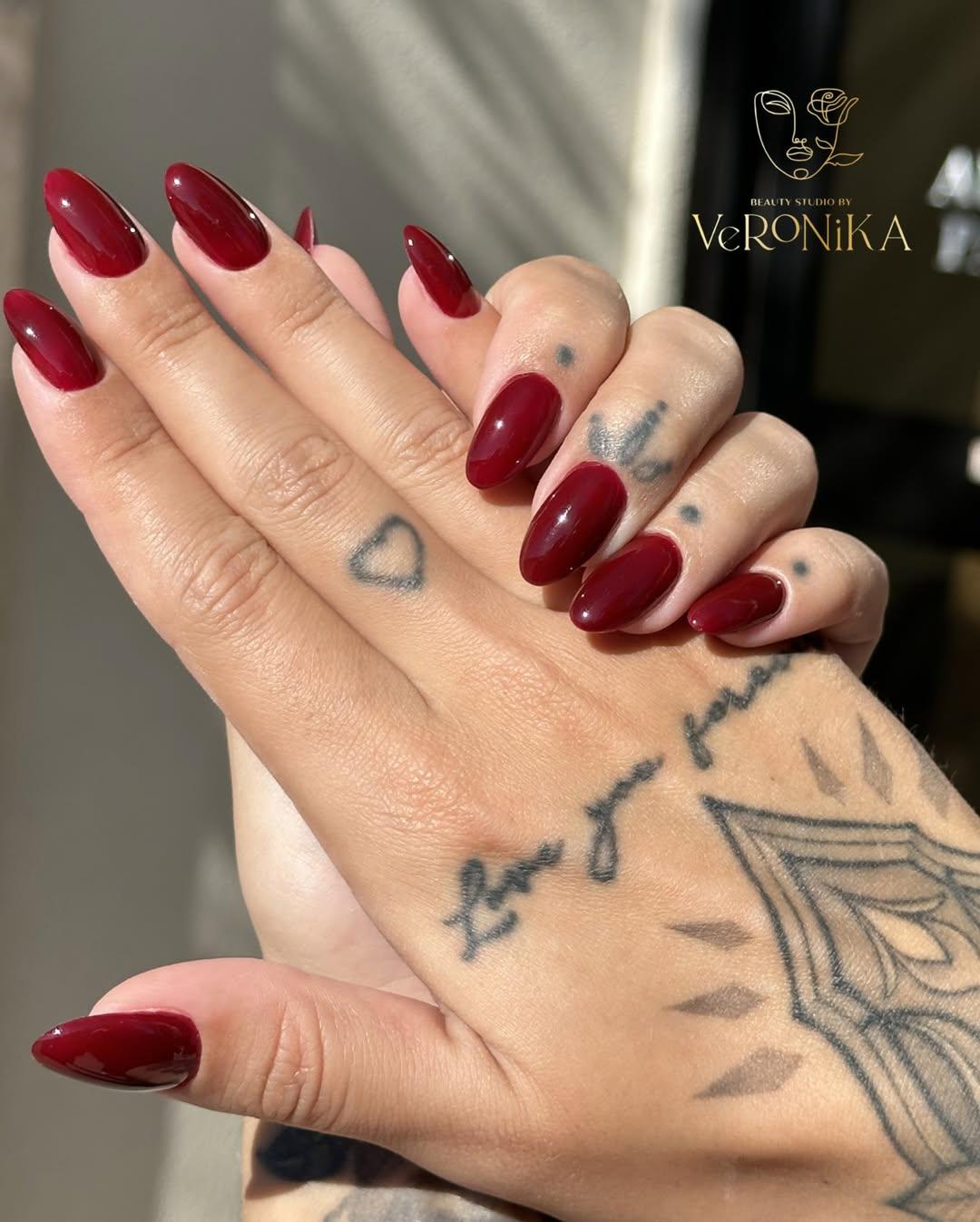
Thin nails are often misunderstood. Many clients assume that hardness equals damage, while flexibility equals safety. In reality, safety depends on technique, assessment, and restraint. This usually comes up during consultations for russian manicure in Costa Mesa, CA, when clients with naturally thin nail plates worry that hard gel will only make things worse.
Thin nails are not weak by definition. They are simply more flexible and more responsive to pressure. The risk appears when material choice ignores this behavior. Hard gel itself is not harmful, but excessive thickness, incorrect apex placement, or aggressive prep can overload a thin plate. The nail then loses its ability to bend naturally, which increases the chance of lifting or micro-cracks.
A professional approach starts with diagnosis. The technician evaluates nail thickness, elasticity, growth pattern, and how the nail behaves under light pressure. On thin nails, the goal is support, not rigidity. Hard gel is applied in controlled layers, keeping structure minimal and balanced. The apex is adjusted to reinforce stress zones without locking the nail into an unnatural position.
Preparation matters as much as application. Over-filing removes protective layers and makes thin nails even more reactive. Gentle prep preserves the surface so the gel bonds without trauma. Removal is equally critical. Improper soaking or forceful scraping causes more damage than the gel itself. When removal is patient and clean, the natural nail remains intact.
Time between appointments also plays a role. Thin nails benefit from predictable maintenance intervals. Waiting too long increases stress on the structure, while overly frequent changes increase mechanical impact. A stable schedule allows the nail plate to adapt gradually, reducing sensitivity and breakage over time.
Clients often notice the difference after several visits. Properly applied hard gel can reduce splitting, protect length, and improve predictability between appointments. The nail feels supported, not stiff. Growth becomes more even because the plate no longer compensates for imbalance or repeated micro-trauma.
Hard gel is not a universal solution, and it is not always necessary. Some thin nails respond better to short structured overlays or periodic breaks from material. The decision is technical, not cosmetic. What matters is whether the material supports the nail’s natural behavior and lifestyle demands.
This is why experienced specialists treat russian manicure as a system, not a single step. When assessment, application, timing, and removal are aligned, hard gel can be safe for thin nails and may even improve their long-term condition without forcing strength where flexibility is essential.

 English
 Arabic
 French
 Spanish
 Portuguese
 Deutsch
 Turkish
 Italiano
 Russian
 Romaian
 Portuguese (Brazil)
 Greek
Greek