


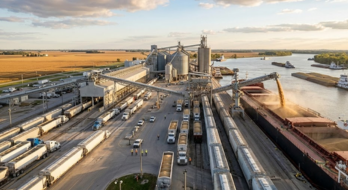
The Soybean Price Trend during Q4 2025 showed a gradual upward movement across major global markets. Tightening global supply expectations and shifting trade flows supported prices, particularly in Asian import markets. Strong export commitments from South America and stable crushing demand sustained consumption. In the near term, soybean prices are expected to face mixed pressures as supply availability and trade dynamics evolve.
Quick Summary
-
Market Direction: Slightly Upward
-
Key Demand Driver: Livestock feed and aquaculture consumption
-
Trade Influence: Changing China-US procurement patterns
-
Supply Factor: South American harvest outlook
-
Volatility Level: Moderate
-
Forecast Bias (2 Years): Mixed to Stable
Market Snapshot (Data Block)
-
China: 599 USD/MT (October 2025) → 615 USD/MT (December 2025)
-
Brazil: 410 USD/MT (October 2025) → 421 USD/MT (December 2025)
-
Market Direction: Upward movement in Q4 2025
-
Volatility Level: Moderate
-
Major Producing Regions: South America, North America
-
Major Import Market: Asia-Pacific
What is Soybean?
Soybean is a globally traded agricultural commodity widely used as a primary source of vegetable oil and protein-rich meal. It is one of the most important oilseed crops in the international agricultural market and plays a critical role in the food, livestock feed, and bio-based industries.
Production Process Overview
Soybean production follows a conventional agricultural cultivation cycle:
-
Land preparation and sowing
-
Crop growth and field management
-
Harvesting and post-harvest processing
-
Crushing to produce soybean oil and soybean meal
Key Industrial Properties
-
High protein content suitable for animal feed
-
Major vegetable oil source
-
Widely used in food processing and oleochemicals
Supply Chain Structure
Farming → Storage and trading → Crushing facilities → Oil and meal production → Food, feed, and industrial sectors.
The soybean market is highly influenced by seasonal crop cycles, international trade policies, and feed demand from livestock industries.
Current Price Trend Analysis (2024–2026)
Global soybean markets demonstrated a controlled upward movement during the fourth quarter of 2025, supported by tightening supply expectations and shifting global trade dynamics.
Quarterly Pattern Behavior
During Q4 2025, Asian soybean markets experienced noticeable price strengthening.
-
Prices in China moved from 599 USD/MT in October to 615 USD/MT in December.
-
Brazilian export prices increased from 410 USD/MT to 421 USD/MT during the same period.
This gradual increase reflected improving demand conditions and tightening supply expectations ahead of the South American harvest.
Key Market Developments
Several structural factors shaped the price movement:
-
China resumed soybean purchases from US suppliers as trade negotiations progressed.
-
Import demand remained steady due to consistent crushing activity.
-
Livestock and aquaculture sectors sustained baseline consumption for soybean meal.
Despite strong raw soybean prices, derivative markets faced pressure as soybean oil imports increased supply in regional markets.
Key Price Drivers
Raw Material Supply → Price Impact
Soybean prices are directly influenced by crop yields and harvest expectations.
-
Concerns about upcoming South American harvest conditions tightened supply expectations.
-
Export commitments increased as international buyers secured supplies ahead of harvest.
Impact: Supported upward price momentum.
Energy Costs → Production Economics
Energy costs affect transportation, processing, and agricultural operations.
-
Stable energy conditions supported consistent crushing activity.
-
Processing facilities maintained regular operations without major cost disruptions.
Impact: Maintained steady supply flows and operational stability.
Industrial Demand → Consumption Support
Soybean demand is driven primarily by the feed and food industries.
-
Livestock and aquaculture sectors maintained stable feed demand.
-
Crushing plants continued regular operations to meet soybean meal demand.
Impact: Sustained baseline consumption and price support.
Environmental Regulations → Agricultural Production
Agricultural sustainability policies and land use regulations influence soybean cultivation and export flows.
-
Regional environmental compliance measures can impact farming expansion and production costs.
Impact: Long-term influence on supply growth.
Logistics & Freight → Export Competitiveness
Soybean is a globally traded commodity heavily dependent on maritime logistics.
-
South American ports managed strong export commitments.
-
Freight conditions influenced import parity prices in Europe and Asia.
Impact: Logistics adjustments affected regional price parity.
Geopolitical Risks → Trade Flow Shifts
International trade policies significantly affect soybean markets.
-
China’s procurement shift toward US suppliers following improved trade relations altered global trade flows.
Impact: Strengthened regional demand and supported prices.
Regional Market Analysis
Asia-Pacific
Asia remained the largest soybean import region during Q4 2025.
Chinese soybean prices increased from 599 USD/MT in October to 615 USD/MT in December. Demand remained steady due to consistent crushing operations and livestock feed requirements.
Trade normalization between China and the United States also influenced import sourcing strategies.
North America
North American soybean markets experienced renewed export interest as Chinese buyers resumed procurement.
Improved trade dialogue between major economies supported export demand and contributed to stronger global market sentiment.
Europe
European markets tracked global price trends while maintaining diversified import sourcing.
Crushing facilities continued steady operations to supply soybean meal and vegetable oil for feed and food processing industries. Demand remained stable, though competition from alternative protein sources moderated exceptional growth.
Middle East
The Middle East relies primarily on soybean imports to support livestock feed production and food processing industries. Regional buyers follow international benchmark movements and adjust procurement based on global supply availability.
Forecast & Outlook (2026–2027)
Short-Term Outlook (6–12 Months)
Soybean prices may experience mixed pressures as global supply conditions evolve.
-
Seasonal harvest supplies from South America may increase market availability.
-
Demand from livestock and aquaculture sectors is expected to remain stable.
Market Bias: Stable with periodic fluctuations.
Medium-Term Outlook (2 Years)
Over the next two years, soybean prices are expected to remain influenced by trade dynamics and agricultural production cycles.
-
Global feed demand will continue to support baseline consumption.
-
Export competition among major producing regions will shape international price benchmarks.
Market Bias: Mixed to Stable.
Upside Risks
-
Supply disruptions due to weather events
-
Stronger feed demand growth
-
Trade policy adjustments increasing import demand
Downside Risks
-
Large harvest output from major producing regions
-
Increased competition from alternative feed proteins
-
Slower growth in livestock production
Strategic Procurement Insights
Industrial buyers and commodity traders can adopt several strategies to manage soybean procurement risks.
Supplier Diversification
Source soybeans from multiple producing regions to reduce supply concentration risk.
Contract Structuring
Use a balanced approach combining forward contracts and spot purchases.
Hedging Strategy
Monitor international benchmark markets to manage price exposure.
Inventory Timing
Align procurement schedules with seasonal harvest cycles to optimize purchase timing.
Risk Monitoring
Closely track weather developments and international trade policies influencing soybean exports.
For deeper insights, buyers can Request Latest Price Data or access a detailed soybean market intelligence report.
FAQ – Soybean Price Trend
What is driving the soybean price trend?
Soybean prices are primarily driven by global supply conditions, international trade flows, and demand from livestock feed industries. Crop production expectations in South America and changes in Chinese import patterns played a significant role in shaping Q4 2025 price movements.
Is soybean price expected to rise in 2026?
Soybean prices may experience mixed movement during 2026. Seasonal harvest supplies could increase market availability, while consistent demand from livestock feed industries may continue supporting baseline price levels.
What region offers the lowest soybean pricing?
South American export markets typically provide competitive pricing due to large-scale agricultural production and strong export infrastructure. Brazilian soybean prices showed competitive levels during Q4 2025.
Is soybean a volatile commodity?
Soybean markets generally exhibit moderate volatility because prices are influenced by seasonal harvest cycles, weather conditions, and international trade policies affecting supply and demand.
What industries should monitor soybean prices?
Key industries monitoring soybean prices include livestock feed manufacturers, aquaculture producers, food processing companies, vegetable oil refiners, and bio-based product manufacturers.
How do trade policies influence soybean prices?
Trade negotiations and tariff adjustments can significantly alter global trade flows. Changes in import sourcing strategies by major buyers such as China can influence demand distribution and global price benchmarks.

 Arabic
 French
 Spanish
 Portuguese
 Deutsch
 Turkish
 Dutch
Dutch
 Italiano
 Russian
 Romaian
 Portuguese (Brazil)
 Greek
Greek