


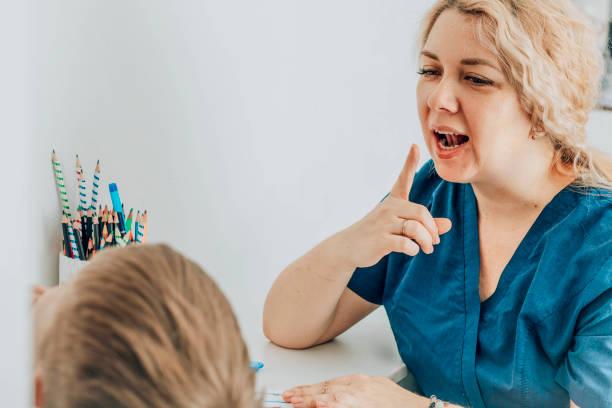
Sometimes, children may struggle to use words to communicate, but that doesn’t mean they don’t have anything to say. They still feel happy, sad, hungry, or tired. When no one understands them, they can feel upset. So, that’s where we come in. We help these children express their feelings in other ways.
We utilize various tools, games, and images to facilitate easier connections between children and others. It’s not just about talking—it’s also about being heard. When children feel understood, they feel calm and safe.
As a speech pathologist Pleasanton, we give support to nonverbal children and their families. Our goal is to help them feel less frustrated and more confident. We also help children find their own ways to express themselves, and that makes all the difference.
The First Signs of Frustration: Consult a Speech Pathologist
Many nonverbal children become upset when they cannot express to someone what they need. They might cry, yell, or even stay quiet for a long time. These are signs that they’re having a hard time. We always watch closely to find these clues.
Sometimes, it’s not just about what the child is doing. It’s also about what they can’t do—like asking for help or saying they’re in pain. When this happens frequently, frustration builds quickly. That’s why we act early. We also teach parents and caregivers how to recognize these signs. When everyone understands what to look for, it gets easier to help the child feel better quickly.
Small Wins, Big Impact
Even little progress can make a significant difference. When a child learns to point to a toy or shake their head “no,” they’re telling us something important. That’s a win. We cheer every step because we know each one leads to the next.
It’s not just about saying words. It’s about finding any way the child can express what’s inside. That could also be using pictures, sounds, or hand signs. We help make those tools part of daily life. We use fun, easy activities to help the child feel happy while learning. When learning feels good, frustration begins to fade away.
Making Mealtimes Easier
Some nonverbal kids also have trouble when it’s time to eat. They may not chew their food well or become scared of certain foods. This can also make mealtimes stressful for the whole family. We work on solving that together. Through feeding therapy Pleasanton, we help children feel safe and comfortable while eating. We observe how they move their mouth and help strengthen those muscles. This way, they can eat better and feel less anxious.
Additionally, we help families make small changes that can have a significant impact. When eating becomes easier, kids enjoy meals and feel more relaxed.
Emotional Expression Through Feeding Support
Eating is not just about food. It also shows how a child is feeling. Sometimes, children won’t eat not because of the food, but because they’re upset or nervous. We take time to understand the full picture.
With the help of feeding therapy Pleasanton, we show kids that eating can feel good again. We also make it a happy time, not a hard time. This helps them feel less frustrated in general. Even small changes, such as how food is offered or where the child sits, can make a significant difference.
Building Trust Through Predictable Tools
Children feel better when they know what’s going to happen. We use tools like picture schedules, speech boards, and simple signs to help with this. These tools make the day easier to understand. We also guide families through using these tools in everyday routines—such as getting dressed or going to school. We show how to keep them simple and fun. So, that way, the child enjoys learning them.
As a speech pathologist Pleasanton, we offer support that fits right into your daily life. These tools also provide children with additional ways to express their needs, allowing them to feel less stuck and more in control.
Finding Hidden Roadblocks
Sometimes, a child’s tongue or jaw doesn’t move the right way. This can make it hard to speak or even eat. These small issues often stay hidden but can cause big problems later. Therefore, we look closely. Many parents find us by searching “orofacial myofunctional therapy near me.” This type of therapy helps strengthen and improve the function of the muscles in the mouth. It also helps with breathing, chewing, and speaking.
We include these exercises in our plan when needed. This gives your child more tools to succeed, and their frustration starts to go down because things feel easier.
Encouraging Interaction Every Day
Children learn best in real life. That means playing, eating, and spending time with family. We help families turn everyday moments into learning time. It doesn’t have to be a big lesson—it just has to be fun and repeated.
We demonstrate how to incorporate sounds, signs, or pictures into playtime. Even something as simple as giving a toy only after a child asks for it can help them learn to speak in their own way. As a speech pathologist Pleasanton, we will guide you through these steps and stay with you the whole way. The more your child practices, the easier it becomes.
Role of Therapy Techniques at a Glance
Here’s a quick look at what we use and how it helps reduce frustration in nonverbal kids:
| Therapy Tool | How It Helps |
|---|---|
| Picture Schedules | Shows what’s happening next, reduces confusion. |
| AAC Devices (like speech tablets) | Helps children speak without using words |
| Feeding Therapy | Makes eating safe and comfortable |
| Play-Based Learning | Makes speech fun and part of everyday play |
| Myofunctional Therapy | Strengthens mouth muscles for speech and eating |
Let’s Give Every Child a Voice
It’s hard for any child to feel stuck or unheard. But there are always ways to help. The key is to keep trying different tools until something works. That’s what we do every day. We guide families, answer questions, and provide support tailored to each child’s needs. At Speech Bloom, we offer a comprehensive range of services, including speech therapy, feeding therapy, and additional support. We believe every child deserves a way to share what they feel. And we’re here to help make that happen—step by step, with care and kindness.

 English
 Arabic
 French
 Spanish
 Portuguese
 Deutsch
 Dutch
Dutch
 Italiano
 Russian
 Romaian
 Portuguese (Brazil)
 Greek
Greek