


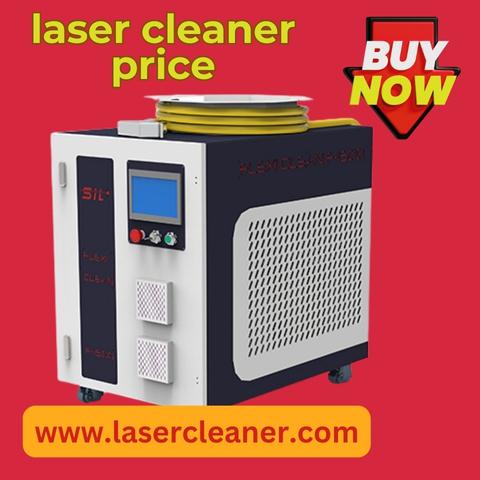
In today’s industrial landscape, precision and efficiency define success. Whether it’s manufacturing, automotive maintenance, or metal restoration, the demand for reliable cleaning solutions continues to rise. Among the advanced technologies shaping this field, laser cleaning has emerged as one of the most effective, environmentally safe, and long-term solutions for removing rust, paint, and contaminants. However, one of the most common questions for those exploring this technology is: what is the actual laser cleaner price and what factors determine it?
Let’s explore the essential aspects of laser cleaner pricing, including how various features, applications, and performance levels influence the cost and long-term value of this investment.
Understanding the Basics of Laser Cleaning
Laser cleaning works through a highly focused beam that vaporizes unwanted substances from a surface without damaging the base material. Unlike traditional cleaning methods that use chemicals or abrasives, laser cleaning operates with precision and minimal waste. It’s a dry, contactless, and highly controlled process that ensures consistent results across different materials — from metal and stone to plastics and composites.
This innovative process is widely adopted in industries that demand precision and sustainability — including aerospace, automotive, shipbuilding, and manufacturing. As adoption grows, so does the curiosity around the laser cleaner price and how to evaluate it for specific needs.
Factors That Influence Laser Cleaner Price
The cost of a laser cleaning machine is not universal; it varies depending on several core elements. Understanding these factors helps buyers identify the right balance between performance, efficiency, and investment.
1. Laser Power Output
One of the primary factors affecting laser cleaner price is the power rating, usually measured in watts (W). The higher the power, the more efficient the cleaning process. Entry-level systems often start from 50W or 100W and are suited for light cleaning and small parts. On the other hand, industrial-grade models with 1000W to 3000W or more are designed for demanding applications like heavy rust removal or paint stripping on large surfaces.
2. Type of Laser Technology
Different laser types impact both cleaning performance and cost. Fiber lasers are the most common choice today due to their efficiency, durability, and minimal maintenance needs. However, variations such as pulsed vs. continuous-wave lasers also affect pricing. Pulsed lasers are typically used for fine surface cleaning, whereas continuous lasers are suitable for deeper or faster material removal.
3. Machine Design and Portability
Another important factor in laser cleaner price is the physical design. Some machines are stationary systems for factory use, while others are handheld or portable units. Handheld laser cleaners are versatile, allowing users to clean hard-to-reach areas or move between different workstations. Portability usually comes at a premium since it involves ergonomic design, cooling systems, and compact engineering.
4. Automation and Integration Options
Modern laser cleaning systems often integrate with robotic arms or automated production lines. Such integration increases productivity and precision, but it also raises the overall laser cleaner price due to additional sensors, control units, and software systems. For large-scale industries, this investment can yield faster returns through reduced labor costs and consistent results.
5. Brand and Manufacturing Origin
The manufacturer’s reputation and the machine’s origin significantly impact the laser cleaner price. Machines made in countries with high manufacturing standards often include better components, advanced optics, and reliable after-sales service. Established brands may charge more, but they also provide better warranty coverage, user training, and long-term support.
6. Additional Features and Accessories
Certain features like dual cleaning modes, adjustable focal lengths, touchscreen controls, and enhanced safety systems can influence the total cost. Optional accessories such as fume extraction units, protective glasses, and carrying cases also contribute to the price variation.
7. Service, Warranty, and Training
A complete laser cleaning solution extends beyond the equipment itself. Post-sale services such as installation, training, and maintenance contracts are essential for safe and efficient operation. Machines with comprehensive support packages tend to have a slightly higher price, but they also ensure longer lifespan and reduced downtime.
Typical Laser Cleaner Price Range
Depending on the power, configuration, and brand, laser cleaner price varies across several ranges:
-
Entry-level handheld models (20W–100W): Typically range from $3,000 to $10,000, ideal for light cleaning or small workshops.
-
Mid-range systems (200W–1000W): Priced between $10,000 and $40,000, these are suitable for medium-scale manufacturing and industrial use.
-
High-power industrial systems (1500W–3000W+): Can cost $40,000 to $80,000 or more, depending on automation, cooling systems, and additional features.
While these ranges serve as general benchmarks, the actual laser cleaner price may vary depending on market trends, supplier location, and customization.
Evaluating Value Over Cost
When assessing laser cleaner price, it’s essential to consider long-term value instead of just upfront cost. A high-quality machine can operate for thousands of hours with minimal maintenance, delivering consistent results and reducing consumable costs.
For instance, industries that previously relied on sandblasting or chemical cleaning methods can achieve massive savings on labor, materials, and environmental compliance when switching to laser cleaning. The reduced waste, faster cleaning time, and extended lifespan of the base material collectively offer a substantial return on investment (ROI).
Furthermore, many businesses find that laser cleaning improves their operational efficiency by minimizing downtime and rework, leading to higher productivity. Over time, the initial investment in a laser cleaner often proves to be more economical than traditional cleaning methods.
Applications That Justify the Investment
Understanding where the technology is most effective helps put the laser cleaner price into context. Here are some common industries where this technology has become a preferred choice:
-
Automotive industry: For removing paint, rust, and oil from car parts without damaging the base metal.
-
Manufacturing and maintenance: Ideal for cleaning molds, tools, and machine parts to ensure precision and longevity.
-
Shipbuilding and aviation: Used to prepare surfaces for welding or coating by removing corrosion and contaminants.
-
Cultural heritage restoration: For cleaning historical artifacts and stone surfaces without abrasive damage.
-
Electronics and energy: Applied in cleaning delicate surfaces where precision is critical.
These diverse applications demonstrate that the laser cleaner price reflects not just a piece of equipment, but a versatile and future-oriented cleaning solution.
Environmental and Operational Advantages
Laser cleaning stands out as one of the cleanest industrial processes available today. Unlike chemical or abrasive cleaning, it produces no secondary waste, requires no consumables, and significantly reduces operator exposure to hazardous substances. It also minimizes noise pollution and eliminates the need for chemical disposal — aligning perfectly with modern sustainability goals.
This environmental compatibility, coupled with precision and speed, explains why many companies view the laser cleaner price as a long-term investment rather than a short-term expense.
How to Choose the Right Supplier
Before investing, it’s essential to evaluate potential suppliers based on their technical support, product certifications, and user training. Reputable suppliers provide clear demonstrations, offer after-sales assistance, and ensure compliance with safety standards.
A reliable vendor can help customize the system according to your industrial requirements — whether it’s for light surface cleaning, rust removal, or paint stripping. Such support not only adds value but also ensures safe and optimal use of your laser cleaning equipment.
Final Thoughts
When examining laser cleaner price, the key is to look beyond the number and focus on the overall performance, reliability, and efficiency the system delivers. Each machine represents a combination of precision engineering, energy efficiency, and technological innovation designed to simplify industrial cleaning tasks.
As industries move toward more sustainable and cost-effective solutions, laser cleaning continues to gain ground. The initial investment may vary depending on power, brand, and design, but the long-term benefits — reduced maintenance, environmental safety, and enhanced productivity — make it an indispensable tool for modern manufacturing and restoration.

 English
 Arabic
 French
 Portuguese
 Deutsch
 Turkish
 Dutch
Dutch
 Italiano
 Russian
 Romaian
 Portuguese (Brazil)
 Greek
Greek