


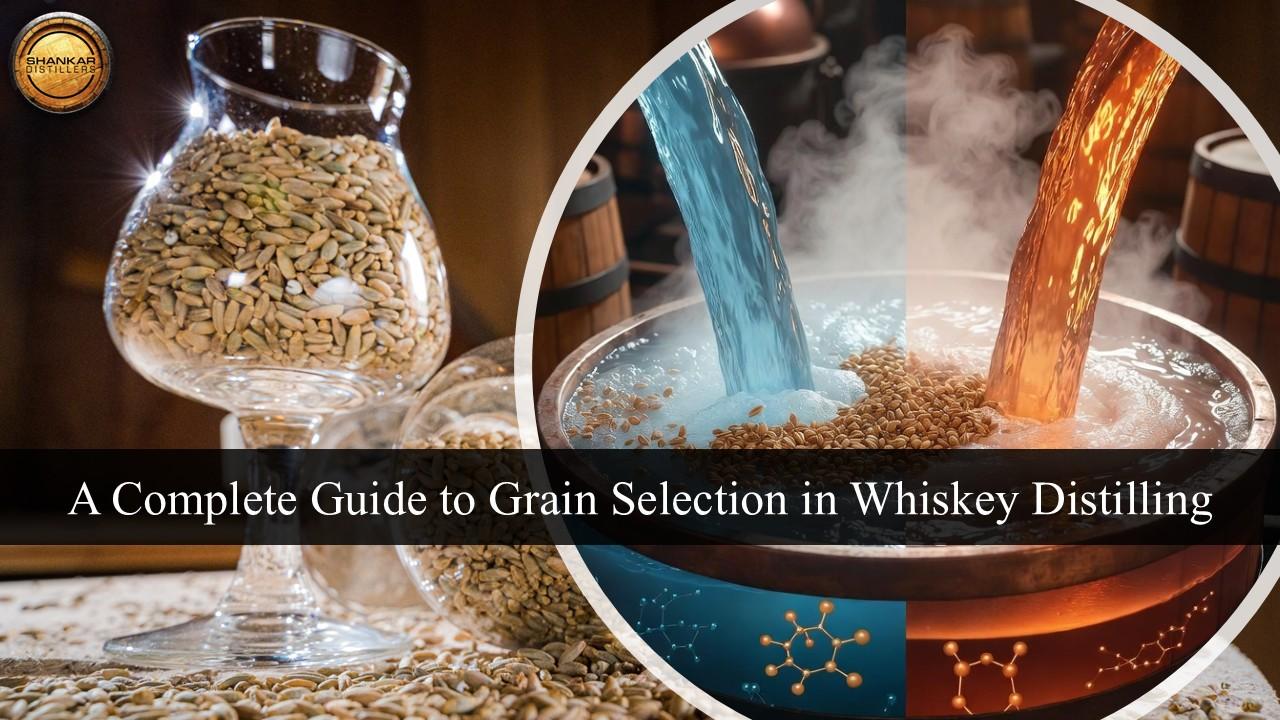
Distilleries select grains for bourbon and rye whiskey based on quality, consistency, flavor contribution, and yield efficiency. Corn provides sweetness and body, rye adds spice and complexity, and malted barley supports fermentation. Factors like sourcing reliability, grain freshness, protein content, moisture levels, and regional availability all influence the final whiskey profile.
Introduction
Grain selection is one of the most critical decisions in whiskey production. The character, flavor, and even the efficiency of distillation depends heavily on the quality and type of grains chosen. Whether producing bourbon or rye whiskey, distillers must carefully evaluate each grain component to maintain consistency while also crafting a distinctive flavor profile.
At operations like Shankar distillers – one of the Premium whiskey distillery in the USA, grain selection is treated as both a science and an art. From sourcing premium corn to selecting high-quality rye, every step is optimized to produce exceptional expressions like Premium Straight Rye Whiskey and Premium Straight Bourbon Whiskey. This meticulous approach ensures a balance between tradition, innovation, and quality.
Types of Grains Used (Corn, Rye, Barley)
The foundation of any whiskey lies in its mash bill—the combination of grains used during production.
Corn (Primary for Bourbon)
Corn is the dominant grain in bourbon, legally required to make up at least 51% of the mash bill. It delivers:
- Sweetness
- Full-bodied texture
- Smooth mouthfeel
Higher corn content often results in a softer, more approachable whiskey.
Rye (Primary for Rye Whiskey)
Rye must constitute at least 51% of rye whiskey mash. It contributes:
- Spicy notes
- Dry finish
- Bold complexity
Rye is more challenging to work with but rewards distillers with a distinctive flavor profile.
Malted Barley (Supporting Grain)
Though used in smaller quantities, malted barley plays a crucial role:
- Provides enzymes for starch conversion
- Enhances fermentation efficiency
- Adds subtle nutty and toasted notes
Some distillers also experiment with wheat for softer bourbon profiles, but corn, rye, and barley remain the core trio.
Sourcing and Supplier Selection
Grain sourcing is not just about availability—it’s about consistency and trust.
Key Considerations:
- Long-term supplier relationships
- Regional farming practices
- Non-GMO or organic certifications (in some cases)
- Seasonal crop consistency
Distilleries often partner with local farmers to ensure:
- Fresh grain supply
- Traceability
- Better control over quality
Reliable suppliers help maintain batch-to-batch consistency, which is critical for brand identity.
Quality Parameters in Grain Selection
Not all grains are equal. Distillers use strict quality checks before accepting any batch.
Important Quality Factors:
Moisture Content
- Ideal levels prevent spoilage and ensure proper milling
Kernel Size and Uniformity
- Consistent size improves milling efficiency
Starch Content
- Higher starch equals better alcohol yield
Protein Levels
- Impacts fermentation and flavor development
Absence of Contaminants
- Mold, pesticides, or foreign materials can ruin a batch
Advanced distilleries conduct lab testing to verify these parameters before production begins.
Impact on Flavor and Yield
Grain selection directly affects both the sensory profile and production efficiency.
Flavor Impact:
- Corn → Sweet, creamy, caramel notes
- Rye → Peppery, spicy, herbal tones
- Barley → Malty, nutty undertones
The ratio of these grains determines whether the whiskey leans toward sweetness or spice.
Yield Impact:
- High starch grains produce more fermentable sugars
- Better fermentation efficiency leads to higher alcohol output
- Consistent grains reduce production variability
Choosing the right grain mix allows distillers to optimize both quality and profitability.
Local vs Imported Grains
This is a strategic decision that varies by distillery.
Local Grains:
Advantages:
- Fresher supply
- Lower transportation cost
- Supports local agriculture
- Better traceability
Challenges:
- Seasonal variability
- Limited variety
Imported Grains:
Advantages:
- Access to specific grain varieties
- Consistent quality in some cases
Challenges:
- Higher cost
- Supply chain risks
- Longer storage times
Many premium distilleries prefer local sourcing for authenticity and sustainability, while occasionally blending with imported grains for specific flavor goals.
Trends in Grain Sourcing
Modern whiskey production is evolving, and grain sourcing is at the forefront of innovation.
Emerging Trends:
Farm-to-Bottle Approach
Distilleries are increasingly working directly with farmers to control grain quality from the source.
Heirloom Grain Varieties
Older grain strains are being revived to create unique flavor profiles.
Sustainability Focus
Eco-friendly farming practices and reduced carbon footprint are becoming priorities.
Transparency and Traceability
Consumers want to know where ingredients come from, pushing distilleries toward more open sourcing practices.
Experimental Mash Bills
Distillers are exploring unconventional grains and blends to stand out in a competitive market.
These trends are reshaping how whiskey is produced and marketed globally.
Experiencing Grain-to-Glass Craftsmanship
Understanding grain selection becomes even more engaging when experienced firsthand. Premium distilleries often offer immersive tours and tastings, allowing visitors to explore how raw ingredients transform into refined spirits.
You can explore this journey at the Event and Tasting Room Michigan or even host curated experiences at a Corporate event venue Michigan, where the nuances of grain selection and whiskey craftsmanship come to life.
Conclusion
Grain selection is the backbone of bourbon and rye whiskey production. From choosing the right mix of corn, rye, and barley to evaluating quality parameters and sourcing strategies, every decision shapes the final spirit.
Modern distilleries balance tradition with innovation—leveraging local sourcing, adopting sustainable practices, and experimenting with new grain varieties. The result is a diverse and evolving whiskey landscape where each bottle tells a story of its ingredients.
For producers, mastering grain selection means achieving consistency, maximizing yield, and delivering exceptional flavor. For enthusiasts, it offers a deeper appreciation of what goes into every sip.
In the end, great whiskey doesn’t begin in the barrel—it begins in the grain.
Useful Links

 English
 Arabic
 French
 Spanish
 Portuguese
 Turkish
 Dutch
Dutch
 Italiano
 Russian
 Romaian
 Portuguese (Brazil)
 Greek
Greek