


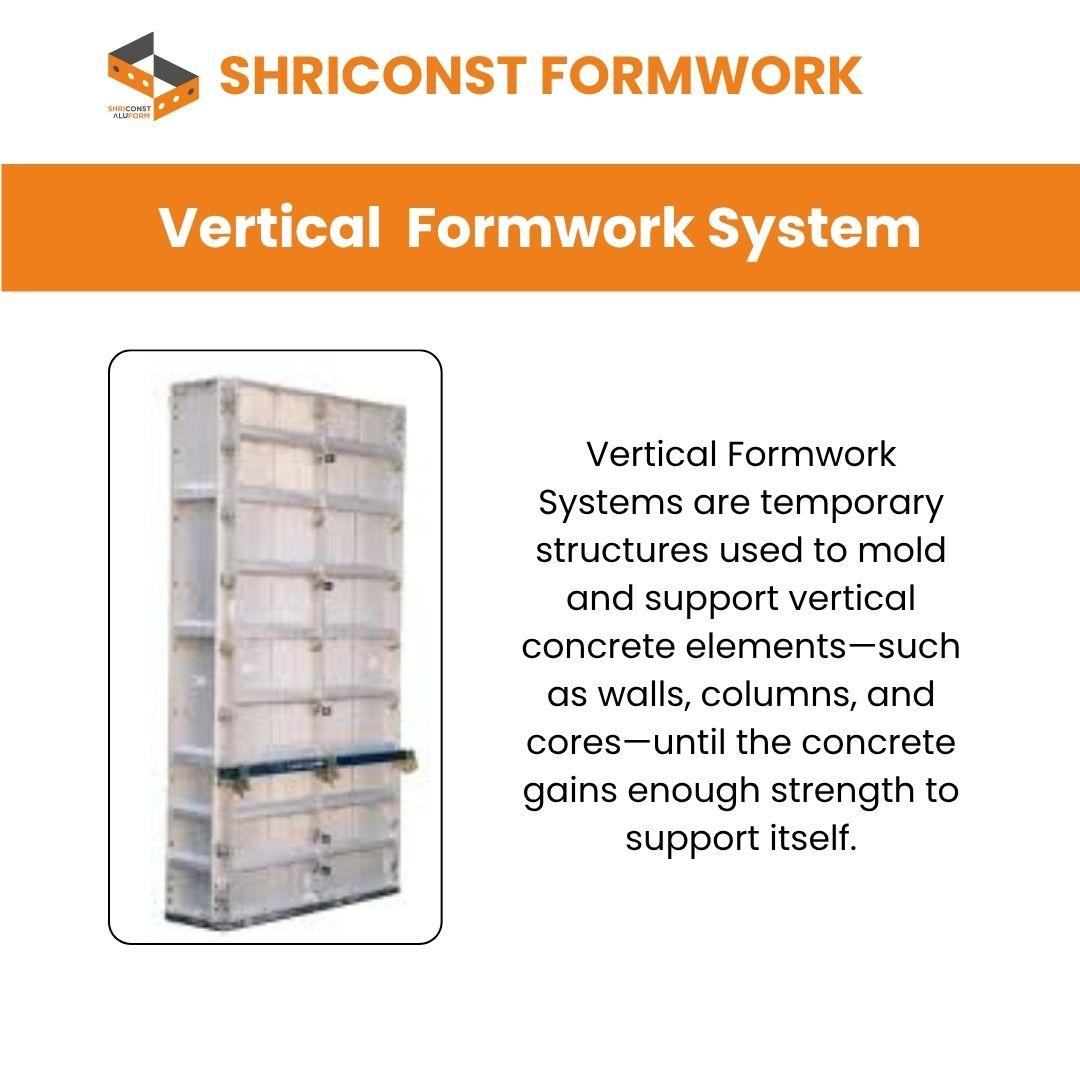
Vertical shuttering is a vital component in modern construction, ensuring structural precision, smooth surface finishes, and cost-effective execution of vertical concrete elements like columns, walls, and beams. As construction technologies evolve, the demand for efficient, sustainable, and reusable shuttering systems has significantly increased. By adopting innovative frameworks such as aluminium-based solutions, companies like Shriconst Aluform have transformed how concrete structures are formed and finished, leading to faster, safer, and more reliable building processes.
Understanding the Concept of Vertical Shuttering
Vertical shuttering refers to the temporary mould or framework used to hold concrete in a vertical orientation until it gains sufficient strength to support its own weight. These systems are meticulously designed to ensure accuracy, stability, and desired geometric dimensions in concrete components. Traditional vertical shuttering typically utilized wood or steel; however, technological advancements have brought lightweight materials like aluminium into the picture.
The adoption of aluminium-based vertical shuttering offers enhanced durability, reduced construction time, and increased reusability. Furthermore, they significantly lower labour costs and enable construction companies to achieve superior surface quality with minimal finishing requirements.
Importance of Vertical Shuttering in Construction
Modern infrastructure projects demand precision and speed, which makes vertical shuttering an indispensable part of any project. Here are some key reasons why it is fundamental in construction:
-
Accuracy in Forming Structural Components: Ensures vertical alignment of columns and walls.
-
Enhanced Surface Finish: Produces smooth concrete surfaces requiring minimal plastering.
-
Time Efficiency: Facilitates quick assembly and dismantling processes.
-
Cost Reduction: Minimizes material wastage and rework.
-
Reusable Frameworks: Aluminium shuttering systems can be used multiple times with minimal maintenance.
Advantages of Aluminium Vertical Shuttering Systems
Aluminium shuttering systems have gained significant traction for their lightweight and user-friendly characteristics. Shriconst Aluform has been at the forefront of this innovation, delivering superior shuttering technology suited to various construction scales.
1. Lightweight yet Robust Design
Aluminium frameworks offer an optimal strength-to-weight ratio, making them easy to handle while maintaining excellent load-bearing capacity.
2. Reusability and Sustainability
Aluminium shuttering can be reused over a hundred times without losing structural integrity. This reusability minimizes environmental waste and project costs, aligning with sustainable construction principles.
3. Quick Installation and Dismantling
Prefabricated modular panels allow for faster setting up and stripping off, accelerating project timelines and improving productivity.
4. Superior Surface Finishing
Due to its precise mould design, aluminium shuttering produces extremely smooth concrete surfaces, reducing the need for extra plastering and polishing.
5. Consistency and Structural Accuracy
The uniform design of aluminium frames ensures identical concrete results across columns and walls, guaranteeing aesthetic and structural harmony throughout the project.
Application Areas of Vertical Shuttering
Vertical shuttering plays a central role in various construction contexts, from residential projects to large-scale commercial infrastructure. Its versatility and precision make it ideal for:
-
High-rise buildings
-
Bridges and flyovers
-
Industrial buildings
-
Parking structures
-
Tunnels and underground facilities
-
Residential housing projects
Each of these applications benefits from the structural accuracy, time efficiency, and cost savings that advanced vertical shuttering systems provide.
How Vertical Shuttering Works
The process of setting up vertical shuttering involves precise stages to ensure the concrete structure’s integrity and durability.
Step 1: Design and Planning
Proper planning is essential to determine panel sizes, load capacity, and reinforcement spacing. Shriconst Aluform provides engineered solutions tailored to specific project requirements.
Step 2: Assembly and Alignment
The pre-engineered aluminium panels are assembled vertically around the structural layout. Proper alignment is crucial to maintain plumb orientation and shape accuracy.
Step 3: Pouring Concrete
Once assembled, the shuttering is filled with fresh concrete, ensuring vibration to eliminate air gaps for a dense, homogeneous structure.
Step 4: Curing and Removal
After the concrete sets and cures, the shuttering panels are carefully detached. Thanks to aluminium’s non-stick properties, removal is smooth, leaving behind high-quality surfaces ready for finishing touches.
Comparing Vertical Shuttering with Other Systems
| Aspect | Vertical Shuttering | Traditional Timber Formwork | Steel Formwork |
|---|---|---|---|
| Material | Aluminium | Wood | Steel |
| Weight | Lightweight | Heavy | Heavy |
| Reusability | Over 100 times | 10–15 times | 40–50 times |
| Surface Finish | Smooth | Moderate | Smooth |
| Setup Time | Quick | Slow | Moderate |
| Sustainability | High | Low | Moderate |
This comparison clearly illustrates why aluminium vertical shuttering is dominating today’s construction landscape, replacing older, less efficient formwork systems.
Benefits of Partnering with Shriconst Aluform
Shriconst Aluform has established itself as a trusted name in providing innovative shuttering solutions. The company delivers customized and standard frameworks that cater to a wide range of construction needs.
Key Advantages
-
Tailored Design Expertise: Each project receives uniquely optimized shuttering configurations.
-
High Durability Standards: Robust aluminium compositions ensure safety and longevity.
-
Technical Support: On-site guidance for assembly, alignment, and maintenance.
-
Rapid Project Turnaround: Prefabricated modules enhance workflow efficiency.
-
Compliance with Global Standards: Systems conform to international quality and sustainability frameworks.
As part of its service excellence, Shriconst Aluform also offers specialised training for teams to handle and maintain the shuttering systems effectively, ensuring maximum value from every investment.
Why Aluminium Vertical Formwork Is the Future
The construction industry continues to embrace aluminium-based systems because of their adaptability and performance. With rising labour costs and growing sustainability demands, aluminium frameworks present an unbeatable combination of durability, reusability, and precision.
When integrated with digital tools like Building Information Modelling (BIM), vertical shuttering systems enable seamless planning, error reduction, and enhanced efficiency across project stages. These factors mark a clear shift toward technologically advanced and environmentally responsible infrastructure development.
Integration with Modern Construction Technologies
Aluminium vertical shuttering can be efficiently combined with other cutting-edge construction techniques such as:
-
Modular Construction: Streamlining prefabrication of structural elements.
-
3D Concrete Printing: Supporting hybrid structures integrating printed and cast elements.
-
Smart Monitoring Sensors: Tracking pressure and curing conditions in real time.
-
Automation and Robotics: Employing automated scaffolding and placement systems for precision installation.
This integration not only accelerates workflows but also ensures consistent results and sustainability in every build.
Conclusion
Vertical shuttering stands as a cornerstone of efficient modern construction. By adopting aluminium-based systems designed and provided by Shriconst Aluform, builders achieve greater accuracy, speed, and sustainability while reducing operational costs. Through continuous innovation and adherence to quality standards, Shriconst Aluform strengthens the foundation of contemporary infrastructure worldwide.
For operations seeking trustworthy solutions in column, wall, and beam forming, integrating advanced vertical formwork systems is undeniably the path forward.

 Arabic
 French
 Spanish
 Portuguese
 Deutsch
 Turkish
 Dutch
Dutch
 Italiano
 Russian
 Romaian
 Portuguese (Brazil)
 Greek
Greek